Ayrton celebrates 70 years of Eurovision Song Contest with Tim Routledge’s lighting
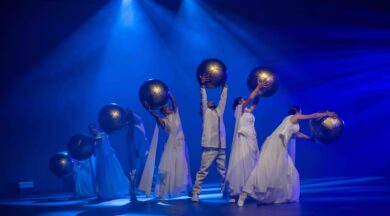
Broadcast by ORF, Austria’s public broadcaster, from the Vienna Stadthalle on 12th, 14th and 16th May 2026, the world’s largest televised live music event, the Eurovision Song Contest, celebrated its 70th anniversary in front of an arena audience of 11,000 and global television audience of millions.
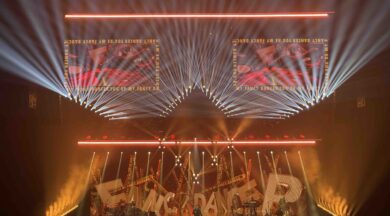
Internationally renowned, award-winning lighting designer, Tim Routledge, returned to light Eurovision for the third time with, for the first time in Eurovision history, a ‘fully green’ design using only LED and laser sources fixtures. This included over 700 Ayrton fixtures, from tried and trusted workhorses to its latest releases: Ayrton Cobra, EagleStrike, Khamsin, Mamba, MagicDot Neo, Nando 502, RawBeam 350, Rivale Profile and Zonda 9 FX.
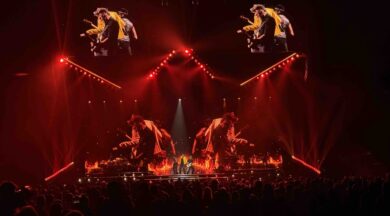
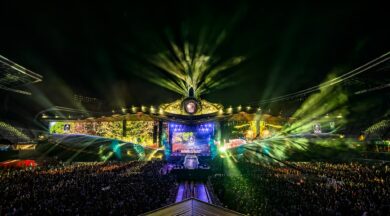
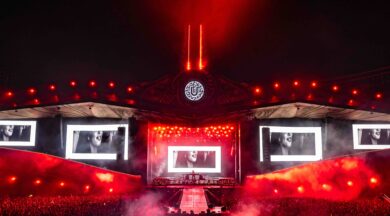
Routledge teamed up once again with ESC veteran show designer, Florian Wieder, whose concept featured an enormous LED floor/backdrop and passerelle shaped like a curved leaf as its centrepiece, a gridwork of golden trussing – The Golden Construct – flanking the screen, and a catwalk linking the Green Room to the stage.
“We worked closely together on integrating the lights seamlessly into the set in a way that would retain its beautiful curves without any intrusive lighting elements obscuring the design,” explains Routledge. “I wanted a simple, very clean grid above the stage that would allow me to change the architecture of the beams continuously, and give me options for the multitude of props and sets used by the delegate entries. We also wanted a clean look when bringing trusses in front of the screen and a sleeker kinetic system than moving pods or trusses.”
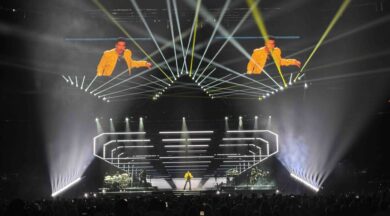
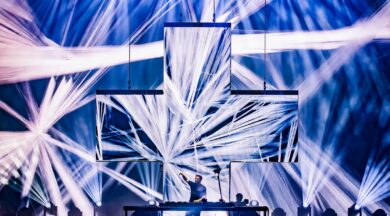
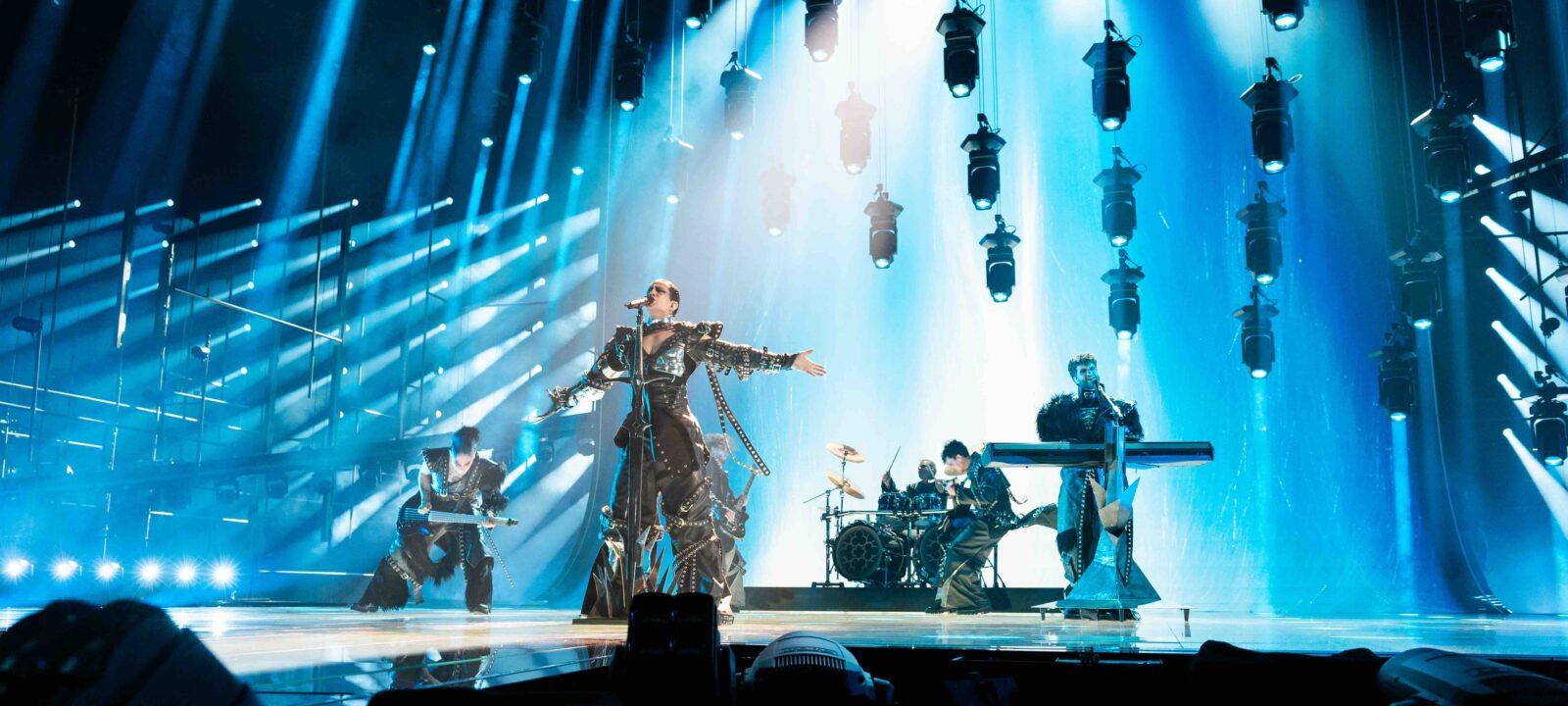
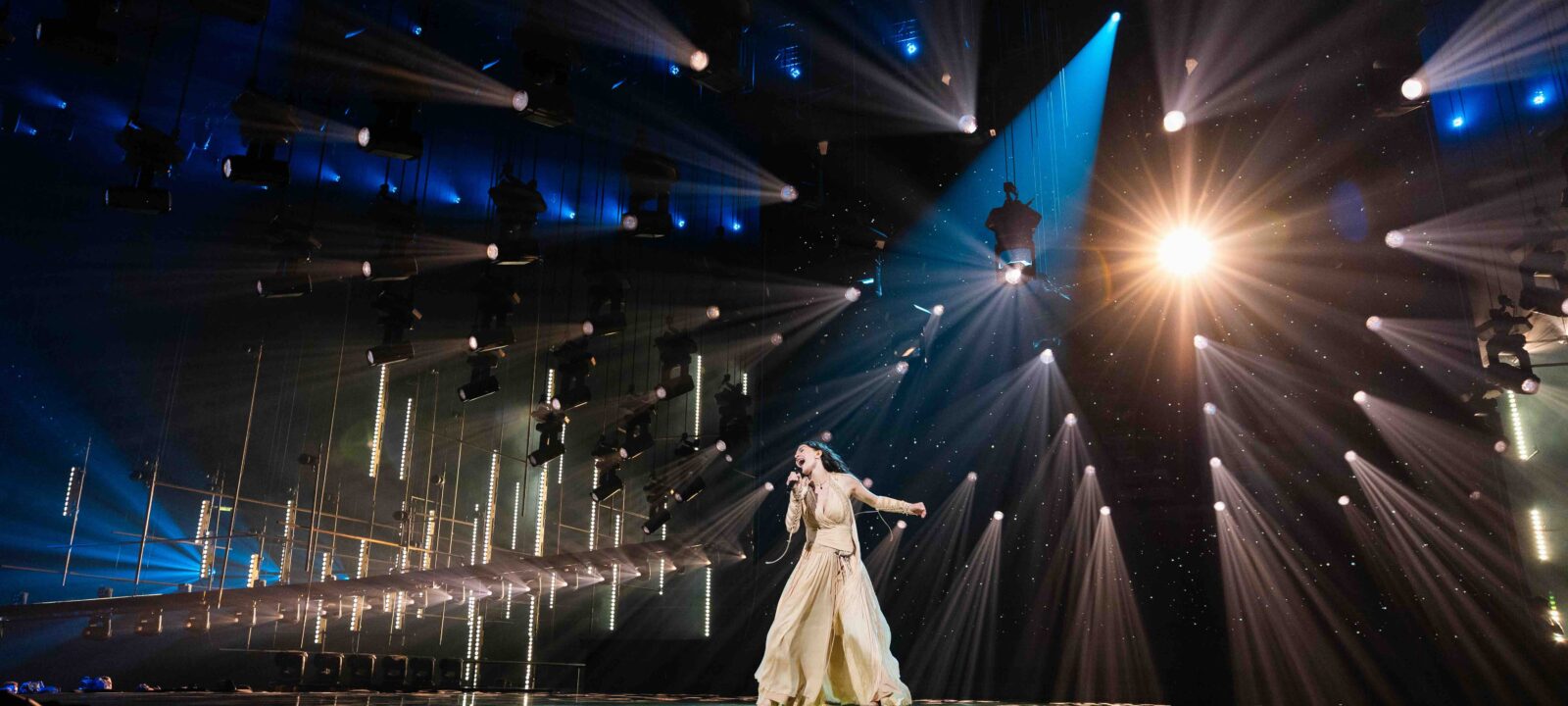
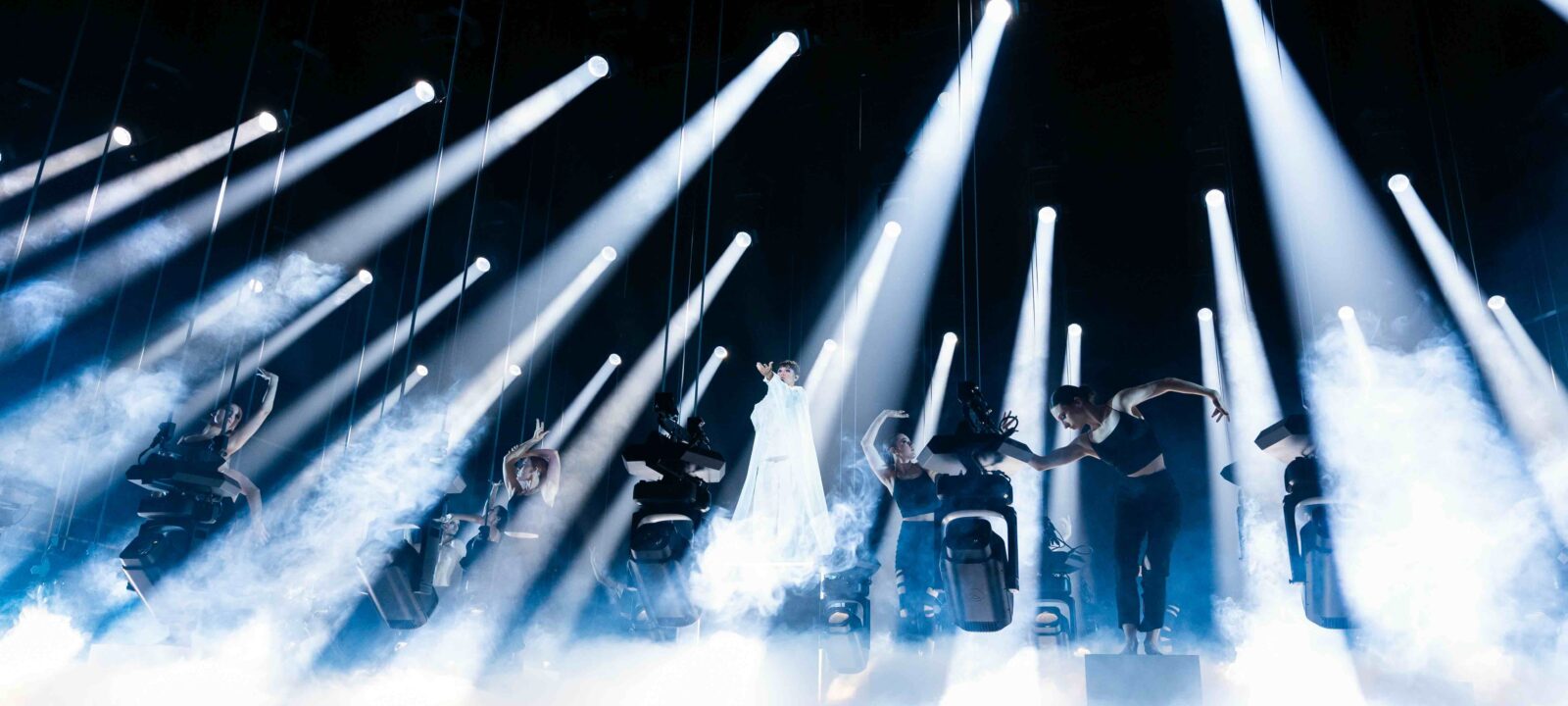
The answer was an overhead array of 80 Rivale Profiles – which Routledge describes as ‘the hero piece’ – each of which was on its own high-speed kinetic winch. “All the winches had a gyroscope to keep them steady and are on X,Y,Z control so we can take control of any light in that rig with FollowMe,” says Routledge. “We were taking live positional data of the fixtures into the console at all times which meant we could point the lights at a spot and move them without changing their focus.”
The array worked hard throughout all three nights, adding dramatic kinetic movement, sine wave undulations and spirals, and a multitude of reconfigured performance spaces for entries such as that of Norway, Serbia, and JJ’s reprisal of Austria’s 2025 winning song, Wasted Love. Here the Rivale Profiles were even lowered in to stage level to project gobos up between the artists and aligned on either side for top side light. At other times the use became more subtle with twinkling gobo effects for Luxembourg’s song and playful framing, chases and polkadot projections for France’s number.
“We specified Rivale Profile for the grid as it fitted our requirements perfectly as a quality profile with shuttering, a high output and good colour rendering, that we could use as key light, back light and for effects,” confirms Routledge, “plus it was literally bang on the weight target at 30.8kg without cable, since our weight limit for each kinetic winch was 35kg.
“We used them consistently throughout, not just for big effects, but also as individual lights that we could drop in as backlight, top light and keylight for different sets on a song-by-song basis. The winning entry, Bulgaria, for example, began in an ‘office room’ and we just dropped 6 Rivale in above the office as top light before they all turned into kinetic effects.
“For another song we had a single back light in the back of shot that was almost invisible itself: instead of wheeling a light out onto the clean stage, we could simply drop in a winch in the darkness and creep the lights in as theatrical TV key light, back light or cross light, as well as doing the big epic moves.
“A malleable grid of lights on very thin wired winches that I could simply drop in where needed proved a clean and efficient way to create anything, anywhere on that stage without obscuring that beautiful flowing floor-into-wall scene – they were the ultimate ‘moving’ moving lights!”
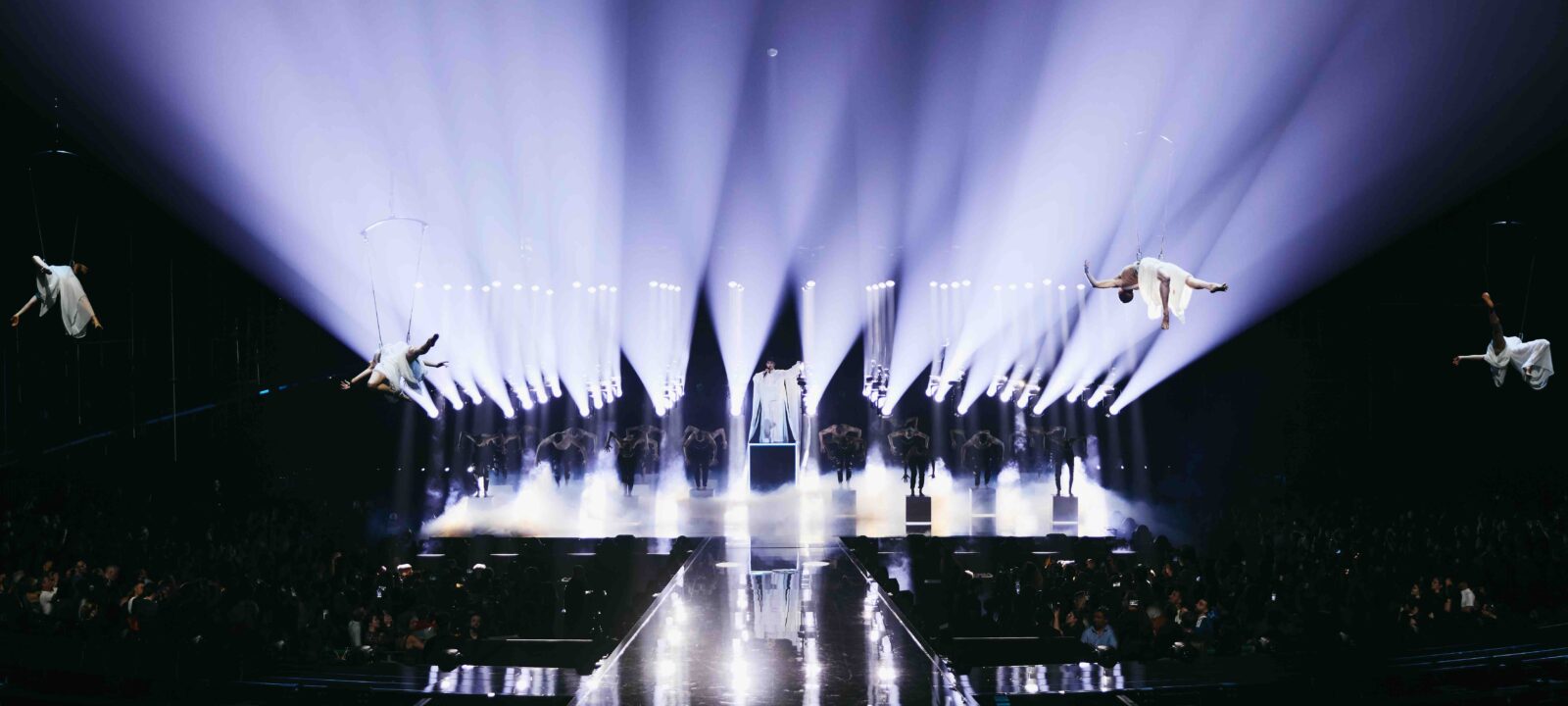
Either side of the central LED back wall was Florian Wieder’s Golden Construct – an abstract array of golden pipework that formed a deliberate contrast to the organic curved lines of ‘leaf’ design that sweeps around the main set. The top and bottom edges of its component truss lengths were each rigged with a MagicDot Neo, one of Ayrton’s latest products. MagicDot Neo has almost the same tiny footprint as the original MagicDot and sports a high definition liquid effect around the beam periphery. “Around 100 MagicDot Neos were doing a lot of work, mainly in point source, adding camera interest to the golden grid and in framing the stage,” confirms Routledge.
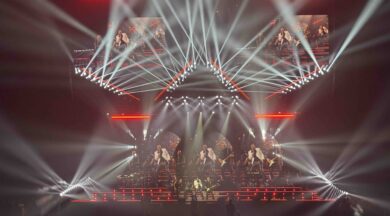
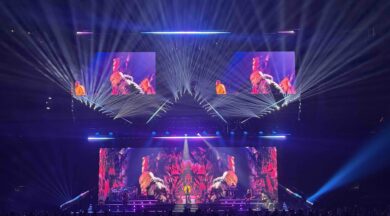
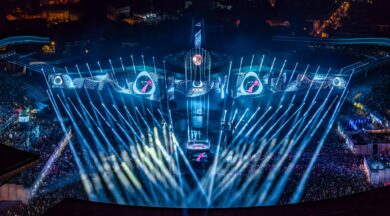
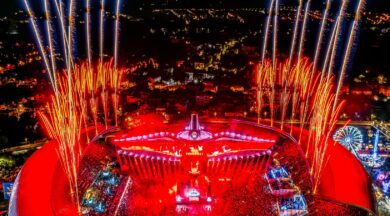
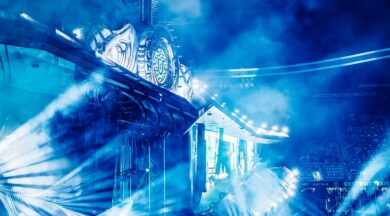
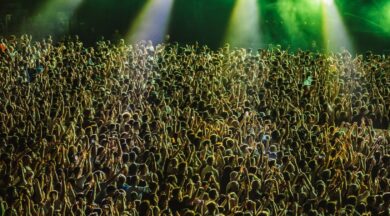
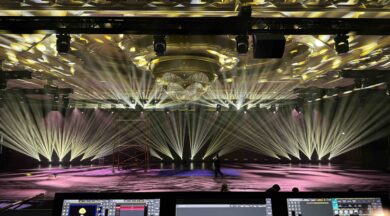
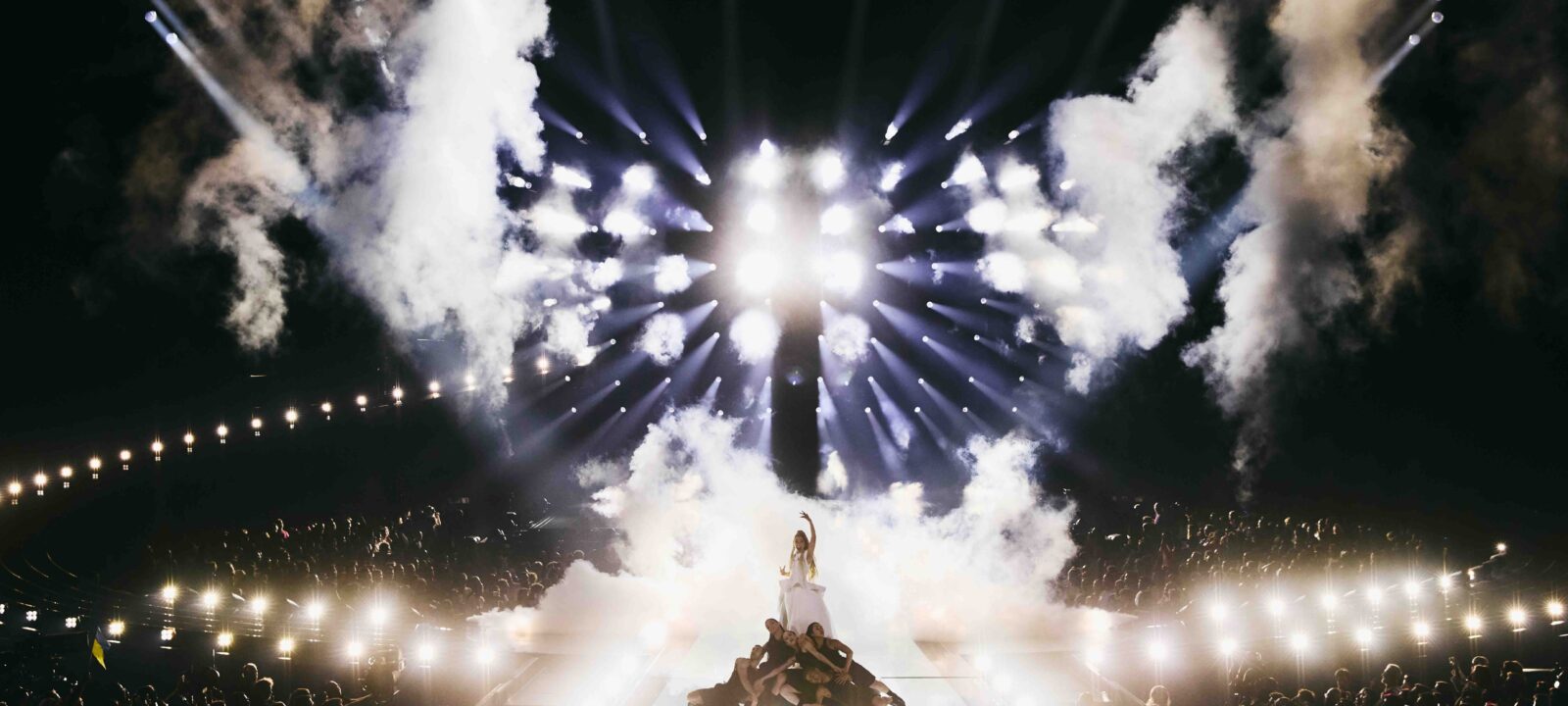
Eurovision has never been an end-on production, however, with camera angles taking in a full 360° view of the auditorium and stage, presenting an even larger canvas for the lighting designer to work on. To this end, four concentric rings of truss were installed over the auditorium to echo the curves of the passerelle, and linear arrays of fixtures mounted on all levels above and within the audience and Green Room.
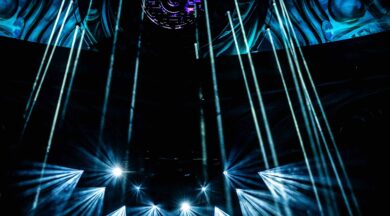
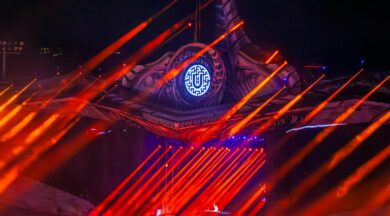
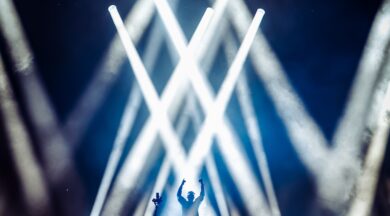
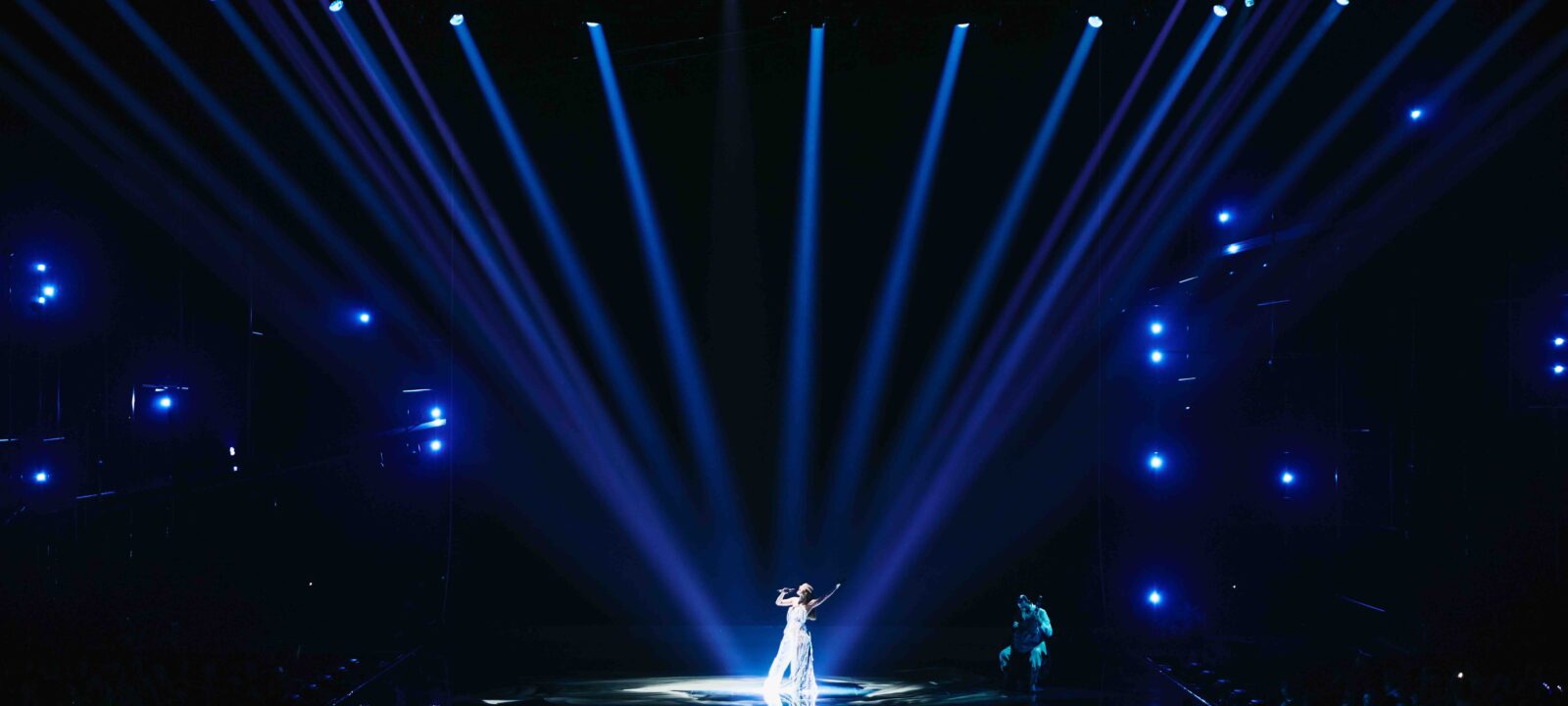
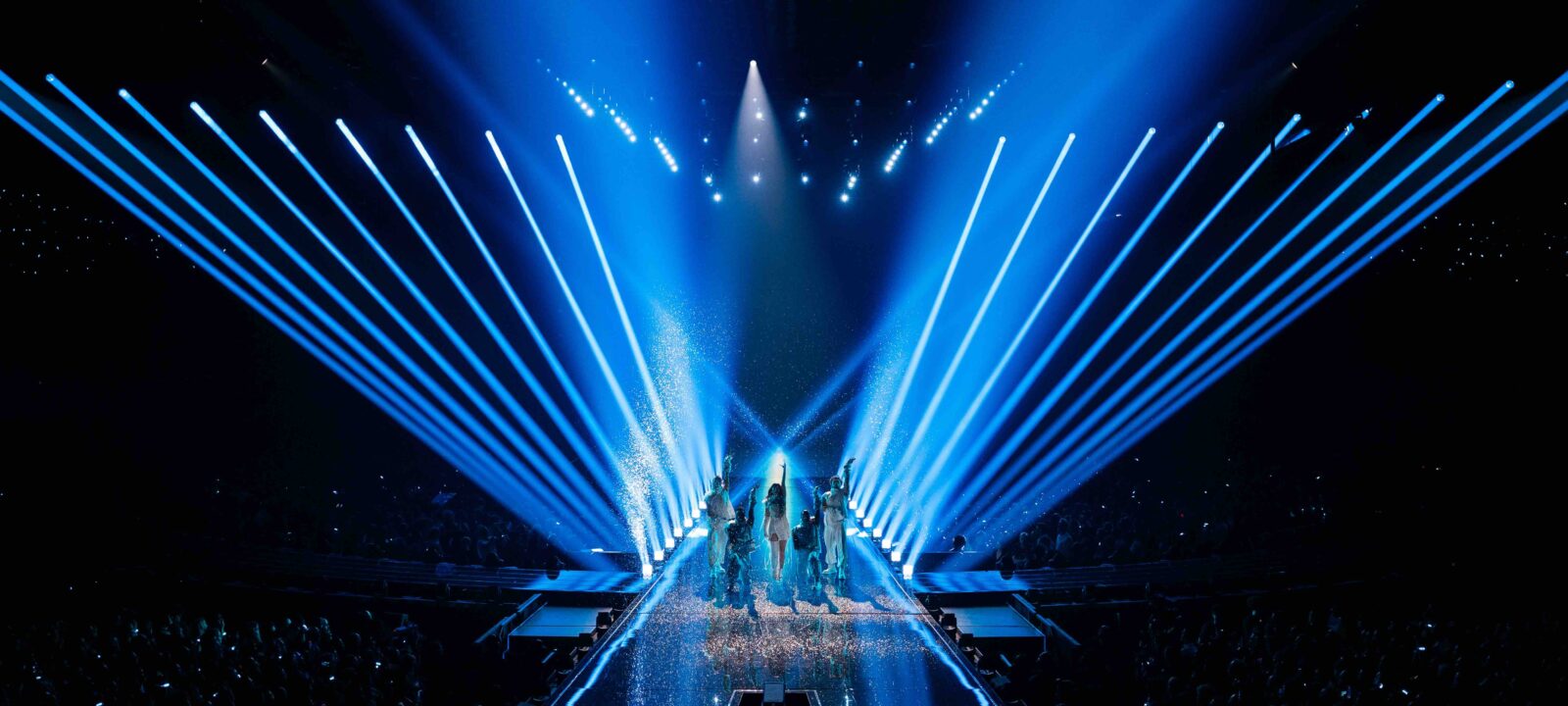
101 Ayrton Mamba fixtures – also a recent addition to the Ayrton product line – were rigged on the two largest circle trusses, outlining the whole stage and far reaches of the auditorium respectively, from where they supplied big beam effects around the room, including ‘basket work’ sweeps encircling the stage on the introduction of each new act. “Just past the Mambas were 80 Cobras on the furthest straight truss positions either side of the room,” adds Routledge, “so we had two big architectural beam looks for the arena, one circular and one linear, between the two different types of fixtures.”
Further beamwork heft was added by 92 new Ayrton EagleStrike units across the rig. These were used for back light, cross light and some key light, in addition to big dynamic effects down the sides of the room, and generally filling in all the main cross shots. “Mamba, Cobra and EagleStrike proved a trio of good workhorse beam fixtures providing great audience candy beams!” confirms Routledge.
Equally as important as the effect lighting was the lighting of the audience and Green Room areas. 106 Ayrton Zonda 9 FX, mainly rigged at the back of the audience, were used for back light and key light on the audience, supplemented by 58 Nando 502 rigged on the back wall of the Green Room and on two of the circle trusses, to provide audience wash.
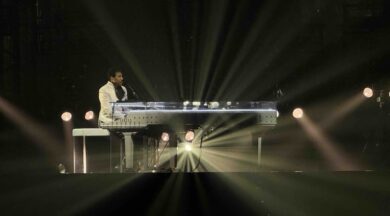
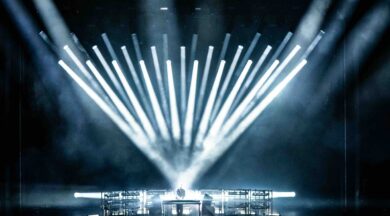
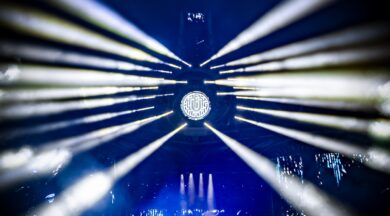
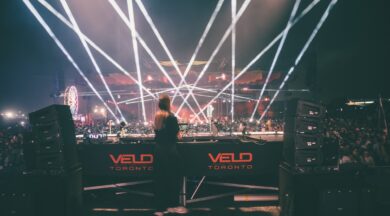
Ayrton’s newest product, RawBeam 350, saw its first outing at Eurovision, 64 of which formed linear arrays on three levels at the back of the Green Room, from where their beams delivered a striking backdrop to the walk off stage for every act, maximising the reflections in the shiny black floor. “RawBeam provided our main big beam effects, gobo work, and back of shot looks, and did a lot of work in the reverse shots as point source, as well as dressing the Green Room,” confirms Routledge. “They were great, high definition beams – rock solid with no issues.”
Last but not least were 48 Khamsin fixtures, stalwart Ayrton products which were mounted on the outer circular truss from where they back lit the Green Room and the Golden Construct and other elements of the scenic pieces.
“We had a huge range of Ayrton products this year, all of which did us proud, and in places exceeded our expectations, especially RawBeam, and we will be seeing much more of those in upcoming projects later this year,” concludes Routledge. « The Eurovision Song Contest is all about big moments. The challenge was to design something that appears impressive and large while being significantly more responsible behind the scenes. Using 100% LED and laser technology on this scale shows that you can have both – spectacular visuals and sustainable production. »
All Ayrton fixtures were supplied by UK-based Neg Earth Lights: “Neg Earth is incredibly proud to have been the lighting vendor for the Eurovision Song Contest once again this year,” says Lindsey Markham, Neg Earth’s Project Manager. “The passion, ambition and drive of Tim Routledge and his team is infectious, and we relish the challenge of delivering this most unique of shows.
“Integrating over 2,500+ lighting fixtures with both custom staging and innovative technology elements alike requires collaboration between us, the design team, the technical crew (led impeccably by Gaffer, Keith Duncan), Eurovision’s production team, and, of course, the fixture manufacturers themselves who go above and beyond to support the show.
“Working alongside Ayrton and Ambersphere is always a pleasure, their understanding of the demands of a show at this scale and their reliable, proactive engagement supports us immeasurably in delivering high profile shows of this nature to the exacting standards we at Neg Earth pride ourselves on.”
« We were delighted at Ambersphere to once again be able to assist the design and programming team for Eurovision, as well as the lighting supplier, Neg Earth,” comments Ambersphere Solutions’ Sales Director, Philip Norfolk. “As the Ayrton distributor for the UK, we know it’s vital to support projects and events both near and far, so playing our part in helping Tim Routledge and his team with design and programming support and Neg Earth Lights with specifications, equipment and logistics is a real pleasure. Bravo to all involved! »
List of Credits:
Lighting Designer: Tim Routledge
Production Set Designer: Florian Wieder
Associate LDs: Morgan Evans & James Scott
Moving Light Programmers: Alex Mildenhall & Martin Higgins
Key Light Programmer: Marc Nicholson
Overnight Programmers – Olly Martin & Manfred Nikitser
Spot Caller: Louisa Smurthwaite
Gaffer: Keith Duncan
Lighting Vendor: Neg Earth
Ayrton Products:
Ayrton Zonda 9 FX: 106
Ayrton Nando 502 Wash: 58
Ayrton EagleStrike: 92
Ayrton Cobra: 80
Ayrton RawBeam 350: 64
Ayrton Khamsin: 48
Ayrton Mamba: 101
Ayrton Rivale: 80
Ayrton MagicDot Neo: 100
Photos:
© Sarah Louise Bennett/EBU, © Alma Bengtsson/EBU and- Corinne Cumming/EBU